Zhu Rongji’s Death Revives Chinese Nostalgia for a Blunter, Bolder Era
The death of former Chinese premier Zhu Rongji at age 97 has stirred an unusual wave of online nostalgia across China, with citizens recalling not...
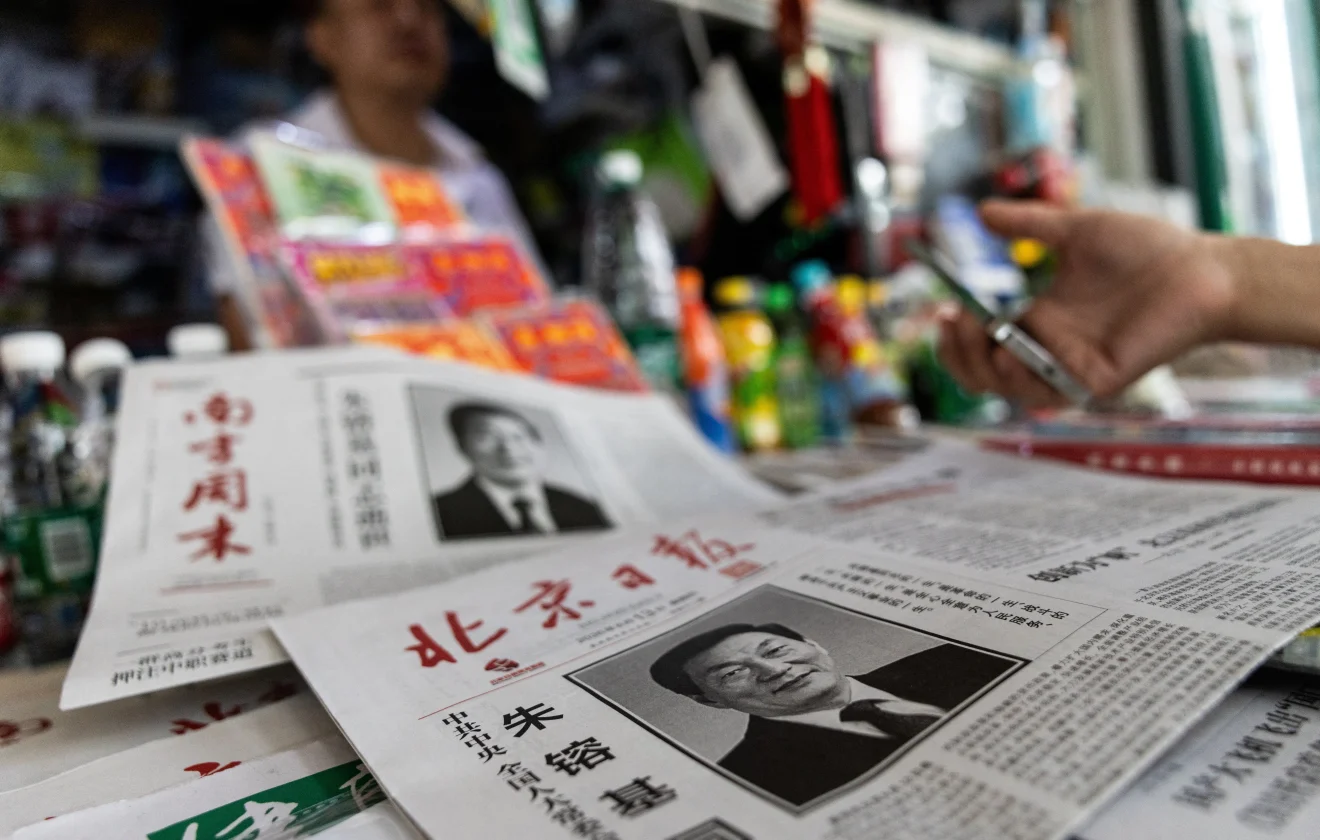
The death of former Chinese premier Zhu Rongji at age 97 has stirred an unusual wave of online nostalgia across China, with citizens recalling not just his role in opening the country to global trade but the blunt, combative style that set him apart from the tightly scripted political culture of Xi Jinping’s China.
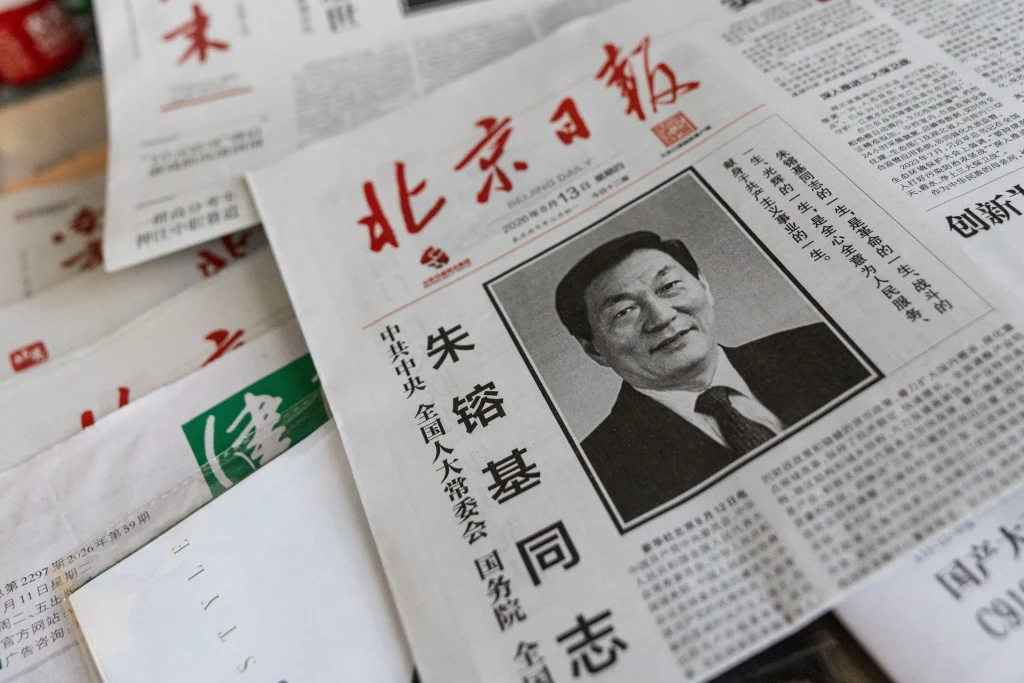
Zhu died Wednesday. State media outlets published the Communist Party’s official obituary, running in the People’s Daily and other major outlets, crediting him with rolling back state controls over the economy and steering China’s integration into world commerce during his decade in senior leadership, first as vice premier and then as premier from 1993 to 2003. President Xi Jinping and other senior leaders are expected to attend a funeral and memorial service in the coming days, though the party has not released details of the arrangements.
A Scripted Tribute, an Unscripted Response
China’s leadership tightly controls how the deaths of former officials are marked, and the party’s tribute to Zhu followed a familiar template — one that observers noted was similar in length and prominence to the obituaries given to former premiers Li Peng in 2019 and Li Keqiang in 2023. The official language praised Zhu for having “dared to speak the truth and did not fear offending others,” a rare acknowledgment, even in formal Communist Party prose, of a leader known for confrontation as much as policy.
That same bluntness became the focus of tributes circulating more informally among ordinary citizens. On Chinese social media, many users recalled Zhu’s combative press conferences and pointed remarks with evident fondness, drawing an implicit contrast with the current political climate, in which senior officials rarely stray from Xi’s messaging. Among the lines cited most often was a 1998 warning Zhu delivered about corruption within the party’s ranks: “I’ve prepared 100 coffins,” he said. “99 of them are for corrupt officials, and I’m leaving one for myself.”
Another frequently recalled remark dated to the same year, when catastrophic flooding along the Yangtze River exposed shoddy construction of flood defenses. Zhu described the failed barriers as “tofu dregs construction, turtle eggs construction” — a phrase whose second half carries a considerably coarser meaning in Chinese than its literal English translation suggests.
Not all commentary online referenced Zhu by name. Rao Yi, president of Capital Medical University in Beijing, posted a tribute on the messaging platform WeChat honoring the broader generation of reform-era officials to which Zhu belonged, writing that they “faced up to the opportunities of reform, they managed the pace of reform, they were the pillars of China’s economic reforms,” without naming Zhu directly — an indication of how sensitive direct commentary on political figures remains in China even in death.
A More Muted Mourning Than Past Leaders
Analysts do not expect the same scale of public mourning that followed the death of Li Keqiang in 2023. Li, who died unexpectedly at 68, prompted an outpouring of grief online and in his home province of Anhui that many read as a veiled expression of public sympathy for an official who had been sidelined politically under Xi. Zhu, by contrast, belonged to an earlier political generation and had largely withdrawn from public life well before his death. Restrictions on political expression in China have also tightened further since 2023, making the kind of visible public mourning seen for Li less likely this time.
A Complicated Economic Legacy
Internationally, Zhu is remembered chiefly for negotiating China’s entry into the World Trade Organization in 2001, a milestone that reshaped the country’s role in the global economy. Domestically, his legacy is viewed in more complex terms. Zhu is also credited with centralizing revenue control in Beijing, a shift that gave the national government far greater fiscal power and laid the groundwork for the large-scale state spending programs pursued by later leaders, including Xi — even as many local governments have since struggled with limited budgets as a result.
Not every assessment of his tenure was celebratory. One essay circulated on WeChat noted that despite Zhu’s public declarations that “the burden on farmers is too heavy,” the underlying problem was never fully resolved during his time in office, regardless of the emotional or rational arguments he made for addressing it.
Yasheng Huang, a professor at the Massachusetts Institute of Technology who has written extensively on China’s economic transformation, argued that Zhu’s focus on courting international business came at the expense of rural development. According to Huang, Zhu’s policies restricted financial flows to the small rural factories that had proliferated in the prior decade, forcing many to shut down and stalling momentum in the countryside. “We need to incorporate into our assessment what happened in rural China, which after all was 70 to 80 percent of the Chinese population,” Huang wrote. “Zhu was a reformer but he was one in a way far more complex than often portrayed.”
Julian Gewirtz, a China historian at Columbia University currently writing a book on U.S.-China relations after the Cold War, described Zhu as emblematic of the contradictions inherent in China’s reform era. “Zhu Rongji was a leader who reflected the paradoxes of reform-era China: the pursuit of rapid economic growth paired with enduring political control,” Gewirtz said, adding that Zhu resisted attempts by Western observers to cast him in familiar molds of political liberalization.